
How Further?
This is what rules the next move...

You know how it works…
Trade what’s next!
Not “what happened”.
So…
The question in the current geopolitical landscape is…
Where do we go from here?
More escalation?
Prolonged conflict?
Higher energy prices?
Or…
Resolution and deescalation?!
The answer there dictates how the market will move ahead.
Let me explain…
The transmission mechanism:
Ok…
First principle.
A geopolitical event by itself is not the trade.
The trade is the transmission mechanism.
Meaning…
How does that event travel through the financial system?
Does it hit oil?
Does it hit gas?
Does it hit shipping lanes?
Does it hit inflation expectations?
Does it hit consumer confidence?
Does it hit growth?
Does it force central banks to stay tighter for longer?
That’s the sequence
Now…
What should you watch first?
Energy.
Always energy.
It’s all about energy prices:
Energy right now is the cleanest bridge between geopolitics and the real economy.
If energy disruption gets worse, not better…
The market will expect:
Stickier inflation
Weaker margins
Slower growth
Pressure on already fragile economies
And that’s where the trade begins appears.
The US Dollar:
Let me show you the chart that clears every doubt:
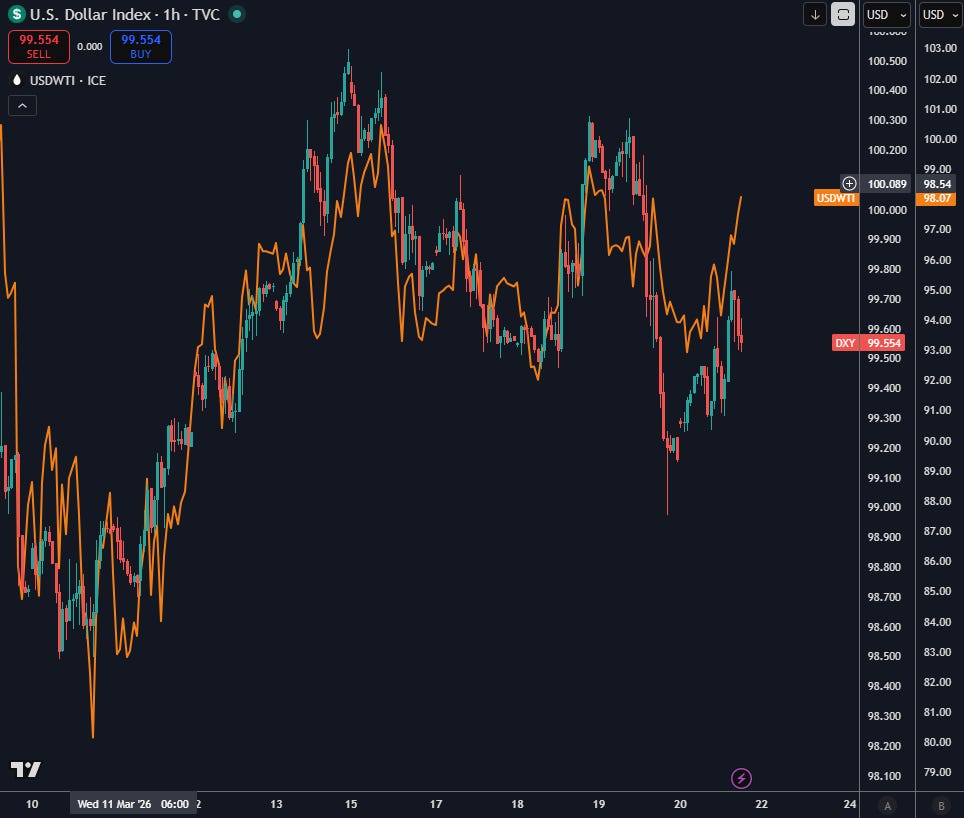
In candlestick you can see the Dollar index.
And in the orange line you can see WTI Crude Oil.
Notice the correlation?
If the energy disruption gets worse, not better…
The result is simple:
Bullish USD.
(and bearish equities)
But let’s go one level deeper.
Why bullish USD?
Because the dollar benefits from multiple channels at the same time.
Safe haven demand
When uncertainty rises, global capital wants safety, liquidity, and depth.
And the USD still sits at the center of that system.
But that’s not all.
Higher US yield
The market is already pricing a world where the FED will have to keep rates high for longer than anticipated.
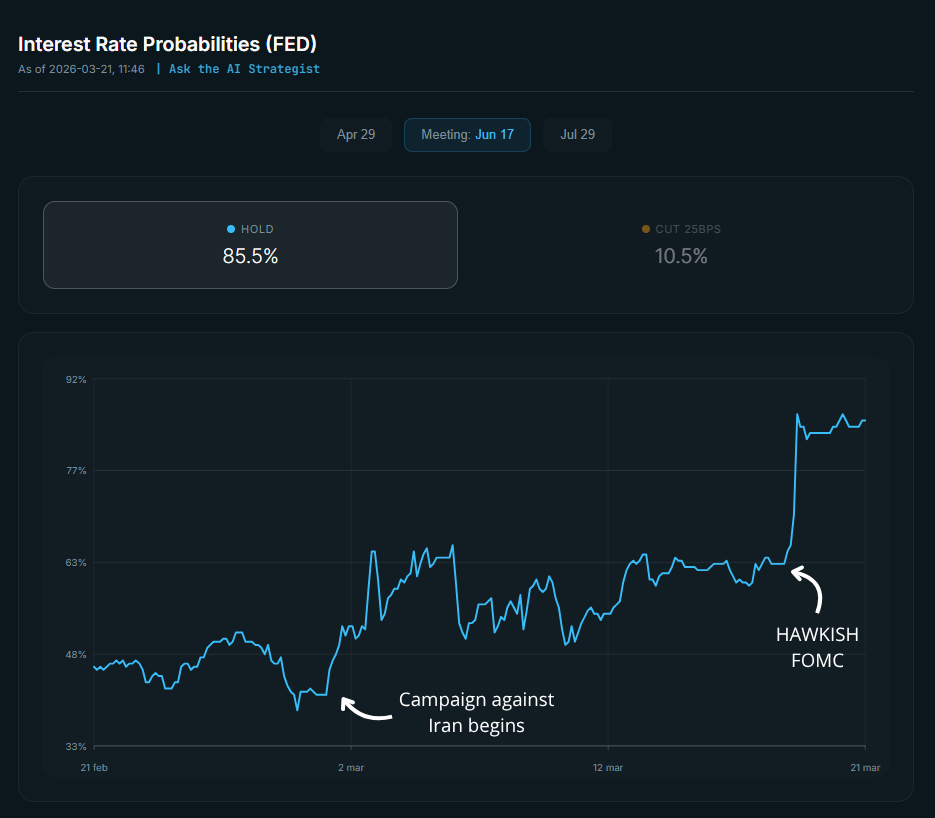
And sure!
The same is true for all other central banks too.
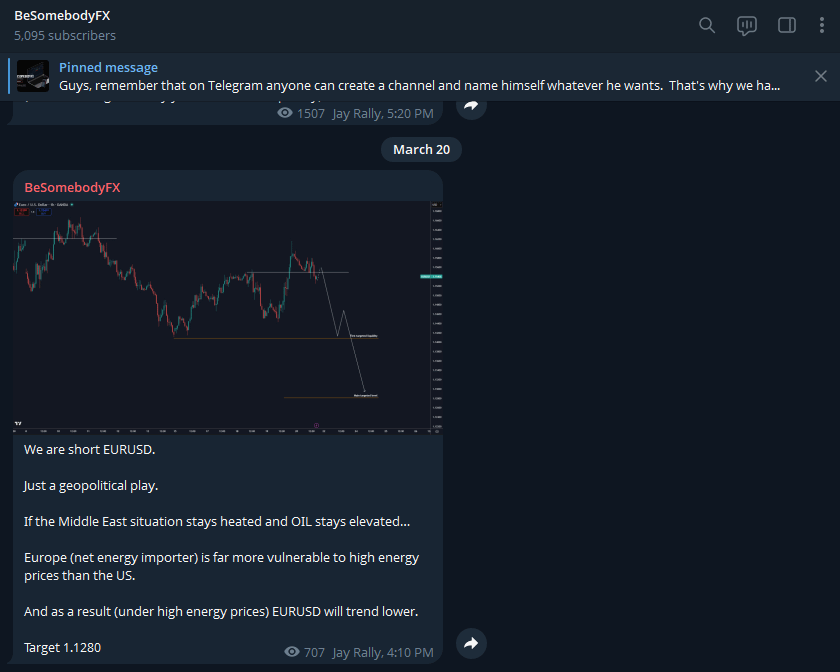
But exposure to high energy prices is NOT the same, at all!
And in many escalation scenarios, Europe is way more vulnerable than the US.
Growth sensitivity.
Energy sensitivity.
Industrial sensitivity.
The ECB can hike as much as it wants, but the market will know they’re hiking into a recession.
So what should you watch from here?
Simple.
Watch whether the energy disruption is getting worse, not better.
That’s the centerpiece.
In other words… the question to always have in mind is:
Is the energy disruption getting worse?
Meaning…
Are energy prices rising further?!
And if the answer is yes…
Then the result is simple:
Bullish USD
Bearish equities (S&P500, NASDAQ, DAX, everything)
Now…
If instead the answer is no…
If the Middle East deescalates…
If disruption fades…
If energy stabilizes…
If the market starts removing the tail risk premium…
Then the opposite scenario is true:
USD strength fades
Risk appetite improves
Equities can bottom
My view?
Scenario number 1.
At least for the next couple of weeks.
I think there’s more pain ahead for markets.
And thus…
That said, always keep in mind…
We have NO control whatsoever on how geopolitics develop.
We can just have informed views and trade the probabilities.
But the context can change at any minute.
Be flexible.
Limit your risk.
Don’t get emotionally attached to a position.
Wonderful insight 👏
Clean as always